What Is EO Sterilization and How Does It Work?
What Is EO Sterilization and How Does It Work?
Eo Sterilization, commonly called ethylene oxide sterilization, protects heat-sensitive medical devices. It treats products that cannot tolerate steam, high temperatures, or moisture. These products include catheters, syringes, wound dressings, and complex plastic assemblies. The U.S. Food and Drug Administration reports that approximately 20 billion medical devices are sterilized annually in the United States. About half use ethylene oxide. That figure shows the method’s industrial importance, but it does not make the process simple.
William A. Rutala, PhD, MPH, an authority in healthcare disinfection, states, “Ethylene oxide is a colorless gas that is flammable and explosive.” His observation explains why controlled equipment and trained personnel matter. Inside a sealed chamber, carefully managed humidity helps EO penetrate packaging and narrow device pathways. The cycle then removes the gas and allows extended aeration. Residual EO must meet applicable safety limits. ISO 11135 supports process validation, while ISO 10993-7 addresses residual ethylene oxide and related chemicals.
The details matter.
FDA guidance on medical-device sterilization emphasizes validated cycles, monitoring, and documented release decisions. The U.S. Environmental Protection Agency also regulates EO emissions because worker and community exposure require careful control. A device may appear clean but still need further aeration. That is an important distinction. Eo Sterilization is effective, yet it demands disciplined validation, environmental safeguards, and continuous review. Industry data supports its value, while responsible practice recognizes its limits.
What EO Sterilization Is and Why It Is Used
What Is EO Sterilization and How Does It Work?
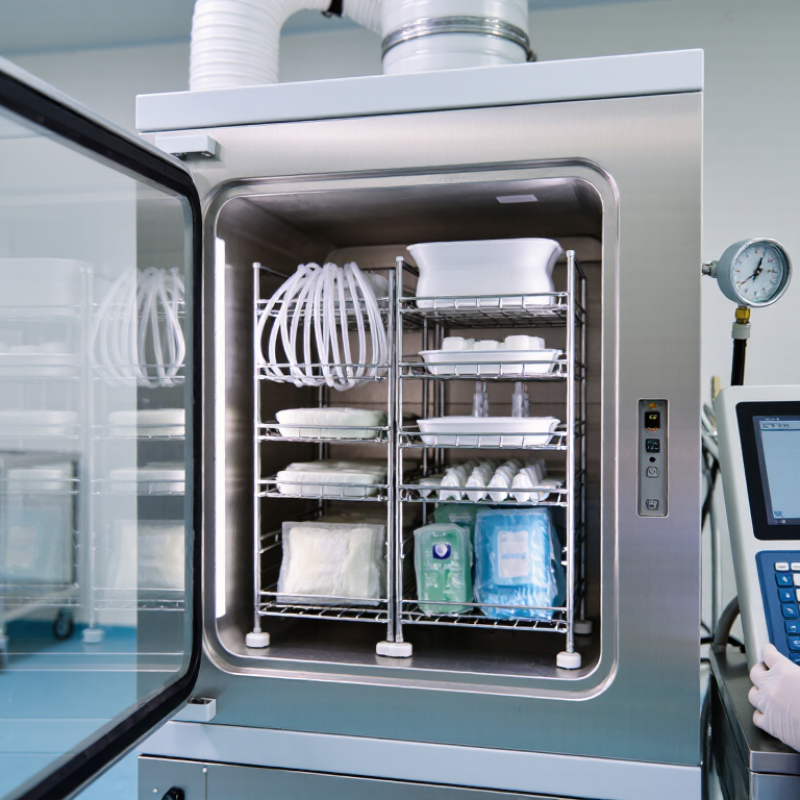
Ethylene oxide (EO) sterilization uses a low-temperature gas to destroy microorganisms. It is especially useful for devices containing plastics, electronics, or delicate polymers. These materials may warp under steam or dry heat. The U.S. Food and Drug Administration reports that EO sterilizes about 50% of sterile medical devices in the United States. That figure shows its industrial importance, but it should not replace product-specific evaluation.
The process usually includes preconditioning, gas exposure, and aeration. Controlled humidity helps EO penetrate packaging and narrow device spaces. During exposure, the gas reacts with proteins and genetic material inside microorganisms. Aeration then removes residual EO before release. The ISO 11135 standard requires validated processes, routine monitoring, and defined acceptance criteria. In practice, the difficult part is not simply adding gas. Load size, packaging design, temperature, humidity, and chamber placement can change the result.
Small details matter. A tightly packed tray may slow gas movement. Residual moisture may also affect performance. Real cycles are not perfectly uniform. Operators therefore review biological indicators, physical records, and chemical indicators together. The FDA also emphasizes worker protection and emission controls because EO is hazardous when poorly managed. This is where careful validation matters more than speed. A shorter cycle may look efficient, yet it can create unanswered questions about sterility or residual gas. Industry data supports EO’s value, but responsible use still depends on evidence from the actual device and process.
How Ethylene Oxide Sterilization Works Step by Step
What Is EO Sterilization and How Does It Work?
How Ethylene Oxide Sterilization Works Step by Step
Ethylene oxide (EO) sterilization uses a reactive gas to destroy microorganisms on heat- or moisture-sensitive medical devices. It can reach narrow channels, wrapped surfaces, and complex assemblies. The method requires controlled equipment, trained personnel, and validated procedures.
The cycle begins with cleaning and drying. Soil can shield microorganisms. Devices are packaged in gas-permeable materials and loaded without blocking circulation. Preconditioning adjusts temperature and humidity, because EO works poorly when moisture is too low. The chamber receives EO at a validated concentration, temperature, and exposure time. The gas penetrates packaging and disrupts essential cellular processes. Sensors and chemical indicators provide process evidence, but indicators do not replace biological monitoring.
After exposure, the chamber is evacuated and flushed repeatedly. Devices then enter aeration, often in a separate controlled area. This step removes residual EO and by-products before release. Technicians review cycle records, load configuration, indicator results, and residual testing where required. Small changes matter. A tightly packed load or damp component can alter performance. EO is effective, but it is not forgiving. One practical weakness is the waiting time for aeration. Faster processing may sound attractive, yet shortening validated steps can compromise safety. Reliable sterilization depends on evidence, not appearance.
Which Medical Products Are Suitable for EO Sterilization
What Is EO Sterilization and How Does It Work?
Which Medical Products Are Suitable for EO Sterilization
Ethylene oxide, or EO, sterilization suits medical products that cannot tolerate steam, high heat, or radiation. It is commonly used for polymer-based devices, wound dressings, catheters, tubing, surgical kits, and products with narrow internal channels. EO gas can move through porous packaging and reach difficult surfaces. The U.S. Food and Drug Administration reports that EO sterilizes about half of sterile medical devices used in the United States, representing more than 20 billion devices each year.
The process normally includes preconditioning, gas exposure, and extended aeration. Controlled humidity helps EO penetrate microorganisms. After exposure, aeration removes residual EO from the product and packaging. ISO 11135 requires manufacturers to validate critical parameters, including temperature, humidity, gas concentration, exposure time, and aeration conditions. A device may look unchanged after processing. That proves very little.
EO is less suitable for products that absorb gas strongly, contain moisture-sensitive formulations, or cannot tolerate long aeration periods. Certain oils, powders, and liquid-filled components also require careful assessment. Material compatibility testing should examine brittleness, discoloration, seal strength, and functional performance. Residual limits must be checked using recognized medical-device standards, not visual inspection alone. In practice, a complex lumen can create the greatest uncertainty. Validation studies sometimes expose weaknesses in packaging, loading patterns, or aeration assumptions. That is not failure; it is useful evidence. Still, treating every heat-sensitive device as automatically suitable for EO would be careless.
How EO Sterilization Is Controlled and Verified
EO sterilization uses ethylene oxide gas to treat heat-sensitive medical devices. The gas penetrates packaging, narrow channels, and porous materials. It disrupts microbial DNA and proteins. Control begins with a validated cycle, not a fixed recipe.
ISO 11135 requires documented control of temperature, humidity, gas concentration, exposure time, and pressure. Operators monitor these variables with calibrated sensors and recorded cycle data. Humidity matters because dry loads can reduce EO effectiveness. Small loading changes may also alter gas distribution. That assumption can fail.
Verification combines physical records, biological indicators, and bioburden testing. ISO 11737 supports bioburden measurement before sterilization. Biological indicators commonly use Bacillus atrophaeus, a resistant test organism. A successful process must support a sterility assurance level of 10⁻⁶, as described in FDA sterility guidance. This means no more than one theoretical surviving microorganism per million sterilized units. Residual EO and ethylene chlorohydrin require separate assessment under ISO 10993-7. Aeration time must be proven, not guessed. It depends on materials, package design, temperature, and device geometry. Operators should review failed indicators, sensor drift, and unusual load patterns. Perfect records do not guarantee perfect understanding. Experience still matters.
Safety, Residuals, and Environmental Considerations
What Is EO Sterilization and How Does It Work?
Ethylene oxide, or EO, sterilizes packaged medical devices through a low-temperature gas process. It penetrates cartons, plastic layers, and narrow channels. Humidity helps the gas disrupt microbial DNA and proteins. After exposure, controlled aeration removes trapped EO from the product.
Safety depends heavily on residual testing. ISO 10993-7 sets allowable EO and ethylene chlorohydrin limits for medical devices. For some exposure categories, the EO limit is 4 mg per day and 60 mg per device. Testing should represent the real product, packaging, load configuration, and worst-case aeration time. A clean-looking package proves little. That assumption is risky.
Worker protection also matters. OSHA lists an 8-hour EO exposure limit of 1 ppm, while the NIOSH Pocket Guide recommends 0.1 ppm as a time-weighted exposure limit. Facilities therefore need leak detection, interlocked chambers, ventilation, and documented release procedures. Environmental controls are becoming stricter. The U.S. EPA’s 2024 amendments require stronger emission controls and monitoring for certain commercial sterilization facilities. EO can escape during chamber unloading, aeration, and equipment maintenance. The process is effective, but not effortless. Even validated cycles can fail when humidity, load density, or aeration changes. Industry teams should treat residual data as evidence, not paperwork.
What Is EO Sterilization and How Does It Work?
Ethylene oxide (EO) sterilization uses EO gas, controlled humidity, temperature, and exposure time to destroy microorganisms on heat- and moisture-sensitive medical devices.
The chart shows representative duration ranges commonly used for major EO process stages. Actual cycle parameters must be validated for the specific device and load in accordance with ISO 11135.
After sterilization, aeration is essential because EO and its by-products can remain as residuals. Residual EO and ethylene chlorohydrin are evaluated according to device use and patient-contact conditions under ISO 10993-7. EO is also a hazardous volatile compound, so facilities require controlled handling, worker protection, emission controls, and appropriate abatement systems.