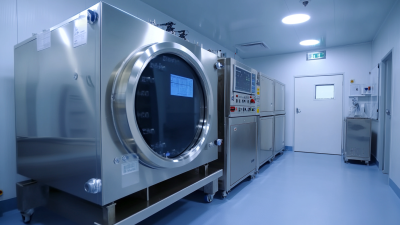
In 2026, global medical-device buyers will assess more than the basic availability of Eto Sterilization. They will compare cycle performance, validation evidence, environmental controls, and supplier reliability. Ethylene oxide remains valuable for heat-sensitive products, including polymer syringes, catheters, wound-care kits, and complex devices with narrow internal channels. It can reach areas that other low-temperature methods may not penetrate easily.
“Sterilization is a process, not a single event,” reminds Dr. William A. Rutala, a widely cited infection-prevention expert. This principle matters when reviewing the leading Eto Sterilization types. Buyers should examine preconditioning, gas exposure, humidity control, aeration, and final residual testing. ISO 11135 provides the central framework for process development and validation. ISO 10993-7 also helps evaluate ethylene oxide and ethylene chlorohydrin residues.
Small details can change the result. A tightly packed carton may restrict gas movement. A dry polymer surface may respond differently from a moist textile pack. Door-to-door logistics also matter, because aeration time can affect delivery schedules and product release.
The “top” method is rarely universal. It depends on material compatibility, product geometry, batch size, packaging design, and local compliance expectations. That conclusion is less convenient, but more accurate. Buyers may also need to question supplier claims that sound impressive yet lack complete validation records. A polished certificate is not the whole story.
This guide compares major Eto Sterilization approaches for 2026. It focuses on practical selection, measurable risk, and evidence that supports confident global purchasing decisions. Mistakes still happen. Careful review reduces them.

Ethylene oxide (ETO) sterilization uses a low-temperature gas to destroy bacteria, viruses, fungi, and resistant spores. The cycle normally includes preconditioning, gas exposure, and aeration. ISO 11135 defines the process framework, while FDA guidance supports validation through bioburden, routine monitoring, and biological indicators. FDA reports that ETO sterilizes about 50% of sterile medical devices in the United States.
That share reflects practical value. ETO penetrates narrow tubing, hinges, porous packaging, and assembled devices that may deform under steam or radiation. Global buyers commonly evaluate large chamber systems, small-batch chambers, and contract sterilization programs. Gas mixtures may also differ, including ETO blended with carbon dioxide or other approved carriers. The choice depends on product materials, chamber volume, and local emissions controls.
Safety cannot be an afterthought. ETO is hazardous, and residual gas must be reduced through validated aeration. The World Health Organization and national regulators emphasize exposure control, worker protection, and environmental management. A faster cycle is not automatically better. I would question any supplier promising universal settings without product-specific validation. Industry reports often forecast continued ETO demand as device production expands, but forecasts are not guarantees. Buyers still need traceable records, calibrated sensors, packaging studies, and independent release criteria. Small details matter: a blocked lumen, a damp carton, or insufficient aeration can change the result.
Ethylene oxide sterilization usually falls into two gas categories: 100% EO and EO blended with carbon dioxide. Pure EO allows precise concentration control inside sealed chambers. EO-CO2 blends reduce flammability concerns, but they may require longer exposure cycles. The selected gas affects pressure control, material compatibility, and workplace safety procedures.
Chamber design creates another important difference. Vacuum cycles remove air before gas injection, helping EO reach narrow lumens and layered packaging. Positive-pressure systems use controlled gas loading and require careful leak monitoring.
Temperature commonly ranges from 37°C to 63°C, while humidity conditioning supports microbial penetration. Aeration then removes residual EO from devices and packaging.
The U.S. Food and Drug Administration reports that EO sterilizes about half of sterile medical devices used in the United States. ISO 11135 defines process-development and validation expectations for EO sterilization. These references support disciplined control of bioburden, humidity, exposure time, and residual gas. In practice, porous polymers may need different aeration times than dense metal components. Small tubing can also behave unpredictably.
That detail matters.
One weakness remains. Buyers sometimes compare gas types without comparing the complete cycle. A lower-temperature process may protect heat-sensitive materials, yet demand longer aeration and tighter residue testing.
Global purchasers should review validated load configurations, chamber mapping, and local emission requirements before selecting an ETO type. A convenient cycle is not always the most reliable cycle.
2026 Top ETO Sterilization Types for Global Buyers
Ethylene oxide remains vital for heat-sensitive medical products. The U.S. FDA reports that EtO sterilizes about 50% of sterile medical devices and nearly 20 billion products annually. That scale matters when comparing chamber, pallet, and continuous systems. A small chamber suits mixed, low-volume loads. Large chambers reduce handling time but demand tighter load mapping and gas distribution studies.
Load design comes first. Measure product density, lumen length, trapped air, and pallet spacing. A crowded carton can slow diffusion, even when the chamber reaches its target concentration. ISO 11135 requires defined and validated sterilization processes, not simple cycle repetition. Packaging also changes performance. Medical-grade paper, nonwoven polymer, and porous pouches allow gas entry while protecting sterility. Film thickness and seal width still need testing. Tiny details matter.
Material compatibility needs practical review. Polymeric components may absorb EtO and require longer aeration. Metals usually tolerate the process, but coatings, adhesives, batteries, and electronic sensors can behave differently. The FDA highlights aeration as essential for reducing residual EtO and by-products. Buyers should compare residual limits, turnaround time, humidity control, and load flexibility, not chamber volume alone. A larger system is not automatically better. My own caution is simple: supplier cycle claims can look precise, yet real loads often vary. Pilot runs and independent validation remain necessary.
In 2026, global buyers should select an ETO sterilization type by compliance needs, not cycle speed alone. Common options include chamber-based cycles, contract sterilization, and low-temperature systems for sensitive medical devices. Each option requires documented control of gas concentration, humidity, temperature, exposure time, and aeration. The right choice depends on product design, packaging, production volume, and destination market.
ISO 11135 remains a key reference for developing, validating, and routinely controlling ETO processes. Buyers should also review residual limits under ISO 10993-7, especially for devices contacting skin, tissue, or blood. National registration rules may request different validation files, labeling details, or process records. Check the importing country early. A certificate accepted in one market may not satisfy another authority.
Packaging must allow ETO penetration while protecting sterility after processing. Polymeric materials can absorb ETO and need extended aeration. Some products also retain moisture, which changes cycle performance. That detail is easy to underestimate. Experienced teams examine worst-case loads, biological indicators, chemical indicators, and routine release data. They should also verify worker protection, emissions control, transport documentation, and facility permits.
A faster cycle may reduce cost, but incomplete aeration can increase residual risk. Lower exposure may protect materials, yet it can challenge microbial lethality. There is no universal “best” ETO type. Buyers should request validation evidence, change-control procedures, deviation histories, and clear responsibilities between the manufacturer and sterilization provider. Mistakes still happen when teams treat compliance as paperwork rather than process evidence.
| ETO Sterilization Type | Gas Configuration | Typical Process Profile | Best-Suited Product Loads | Main Compliance References | Global Buyer Selection Factors | Key Limitations and Controls |
|---|---|---|---|---|---|---|
| 100% Ethylene Oxide, Vacuum-Based Cycle |
Pure ethylene oxide gas introduced into a sealed chamber after air removal.
Pure EO Vacuum |
Commonly includes preconditioning, humidification, air removal, EO exposure, post-exposure evacuation and aeration. The validated cycle may use temperatures below those commonly required for steam sterilization. | Heat- and moisture-sensitive medical devices, long or narrow lumens, porous packaging systems and products with complex internal pathways. | ISO 11135 for development, validation and routine control of EO sterilization; ISO 14937 for general sterilization-process principles; ISO 10993-7 for EO and ethylene chlorohydrin residuals. | Suitable where high material compatibility and deep penetration are required. Buyers should verify local rules for EO storage, worker protection, emissions, transport and residual release. | EO is toxic, flammable and classified as a carcinogenic, mutagenic and reproductive hazard in many regulatory systems. Requires validated aeration, gas monitoring, leak control and residual testing. |
| EO–Carbon Dioxide Blend Cycle |
Ethylene oxide diluted with carbon dioxide to reduce flammability and support controlled gas handling.
EO/CO₂ Diluted Gas |
Uses controlled humidity, temperature, gas concentration, exposure time, pressure and aeration. Exact parameters must be established through product-specific validation rather than copied from another load. | Mixed medical-device loads, polymeric products, tubing, packaged devices and assemblies requiring EO penetration with a diluted-gas approach. | ISO 11135 process validation; ISO 10993-7 residual limits; ISO 11607-1 and ISO 11607-2 for sterile barrier materials and packaging-process validation; applicable dangerous-goods and emissions requirements. | May simplify flammability management compared with undiluted EO, but buyers must confirm the permitted gas composition, cylinder or bulk-supply requirements, import rules and local environmental controls. | Dilution does not eliminate EO hazards. Gas composition, concentration uniformity, chamber mapping, load density, packaging permeability and aeration performance require documented control. |
| Preconditioned and Humidified EO Cycle |
EO exposure follows a controlled preconditioning stage that establishes product temperature and relative humidity.
Humidity-Controlled Preconditioning |
Particularly useful when product moisture content and temperature strongly affect EO lethality. The preconditioning phase is normally monitored and included in the validated process definition. | Porous materials, nonwoven components, cartons, polymeric devices and products whose internal surfaces are difficult to sterilize without adequate humidity. | ISO 11135 requirements for process definition, physical qualification, microbiological qualification, routine monitoring and product release; ISO 11737 for bioburden and sterility testing principles. | Appropriate for buyers needing repeatable penetration through porous or packaged products. Review humidity control range, load equilibration, seasonal performance and requalification requirements. | Excessive moisture can affect packaging, corrosion-sensitive components or product function. Insufficient moisture can reduce process effectiveness. Humidity sensors and load-position studies are essential. |
| Low-Temperature EO Cycle |
EO process operated at a temperature selected to protect heat-sensitive materials, with gas concentration and exposure time adjusted through validation.
Low Temperature Material Protection |
Uses controlled temperature, relative humidity, EO concentration, pressure and exposure time. The lower temperature does not automatically mean a shorter overall process because aeration may still be substantial. | Devices containing temperature-sensitive polymers, adhesives, electronics, optical components or assemblies that may deform or degrade during higher-temperature sterilization. | ISO 11135 for EO validation; ISO 10993-7 for residual assessment; ISO 10993-18 and ISO 10993-17 when chemical characterization or toxicological evaluation is relevant to material and process residues. | Useful when product temperature limits are strict. Buyers should compare total cycle time, aeration capacity, material aging, packaging performance and residual-release results. | Lower temperature can reduce EO reaction kinetics and may increase exposure or aeration demands. Product-specific half-cycle studies and worst-case load validation are required. |
| High-Throughput Chamber EO Cycle |
Large fixed chamber or multiple-chamber configuration designed for repeatable batch processing and controlled load patterns.
Batch Production High Capacity |
Uses defined chamber loading diagrams, validated product families, automated recipe control, continuous environmental monitoring and controlled aeration or transfer to an aeration room. | High-volume disposable medical devices, packaged procedure kits, tubing sets, syringes, dressings and standardized product families. | ISO 11135 routine monitoring and product-release requirements; ISO 13485 quality-management controls; ISO 14971 risk management; applicable occupational-safety and environmental regulations. | Best for predictable recurring demand and multiple validated product families. Evaluate batch capacity, turnaround time, utility requirements, release workflow, contingency capacity and service continuity. | Larger loads can create cold spots, restricted gas flow or uneven humidity. Load configuration, maximum density, product orientation and chamber mapping must be tightly controlled. |
| Small-Batch or Contract-Ready EO Cycle |
Flexible chamber operation allowing validated cycles for limited quantities, development batches or multiple product configurations.
Flexible Loads Small Batches |
Supports controlled recipe selection, product-family grouping and staged qualification. Each product or justified product family still requires evidence that the selected cycle achieves the required sterility assurance level. | New product launches, clinical or pilot production, low-volume devices, frequent packaging changes and products with varying dimensions or materials. | ISO 11135 validation and change-control expectations; ISO 13485 documentation; ISO 14971 risk assessment; ISO 11607 packaging validation where the sterile barrier system is affected. | Attractive for global buyers with variable demand. Confirm minimum batch size, product segregation, data ownership, validation support, release documentation and change-notification procedures. | Frequent changes can increase validation cost and scheduling complexity. Mixing products is acceptable only when justified by documented worst-case evaluation and validated load configurations. |
| EO Cycle with Extended Aeration |
EO sterilization followed by a deliberately extended aeration phase to reduce residual EO and ethylene chlorohydrin in the finished product.
Residual Control Extended Aeration |
Aeration may occur in the chamber or in a dedicated controlled area. Time, temperature, airflow and product loading must be validated for the specific device and packaging configuration. | Products with high EO absorption, thick polymer sections, multilayer packaging, porous materials, long tubing or stringent residual specifications. | ISO 10993-7 residual limits and evaluation principles; ISO 11135 requirements for the complete sterilization process; applicable market-specific chemical-safety and occupational-exposure rules. | Important for products placed on markets with strict residual expectations or sensitive patient-contact applications. Compare total lead time, residual-test results and product-release criteria. | Extending aeration increases cycle time and inventory requirements. Residual levels depend on material, geometry, packaging, EO dose, temperature, airflow and time, not time alone. |
Buyer Compliance Note: No EO cycle type is universally suitable for every product. Final selection should be based on product materials, device geometry, packaging, bioburden, required sterility assurance level, residual limits, validated load configuration, destination-market regulations, worker safety controls and environmental-emission requirements. Process parameters must be established and validated for the specific product or scientifically justified product family.
2026 Top ETO Sterilization Types for Global Buyers
Choosing the right ETO sterilization type depends on your product, destination market, and production volume. Common options include 100% ethylene oxide cycles, gas mixtures, and vacuum-based chamber systems. A narrow chamber may suit small medical components, while a larger system supports packaged kits and higher batch volumes. Check compatibility early. Some polymers become brittle after repeated exposure, and paper packaging may absorb residual gas.
Market requirements can change the best choice. Buyers in regulated markets should request validation records based on ISO 11135 and residual testing aligned with ISO 10993-7. Ask how the supplier controls temperature, humidity, gas concentration, exposure time, and aeration. These details matter more than a simple “sterile” claim. For example, a heat-sensitive catheter may need a low-temperature cycle with extended aeration. A dense tray may require stronger conditioning and careful load mapping.
Cost should not lead the decision. A cheaper cycle can create delayed release, rejected shipments, or packaging changes. I have seen teams compare only cycle prices and overlook aeration capacity. That approach is risky. Confirm the supplier’s experience with your exact material, package size, and target market. Request biological indicator results, chemical indicator records, and product-specific validation evidence. Be cautious with universal promises. No single ETO type fits every market, product, or supply chain.
The chart compares typical ethylene oxide concentration ranges used in common ETO gas formats. Pure EO provides the highest gas concentration but requires strict controls for flammability, worker safety, facility design, and local regulations. EO blends with carbon dioxide or nitrogen reduce flammability risks and may be more suitable for regional compliance and facility requirements.
Values are typical industry ranges rather than product specifications. Final gas concentration, temperature, humidity, exposure time, aeration, and packaging configuration must be validated for each product in accordance with ISO 11135 and applicable national regulations.
As a trusted co-development partner, Teleflex Medical OEM supports industry leaders in the design and development of medical devices with the unparalleled expertise that improves speed, flexibility, and value.
©2025 Teleflex Incorporated. All rights reserved. Teleflex, EPIC Medtec, Force Fiber Fusion, and “Work With The Experts” are trademarks or registered trademarks of Teleflex Incorporated in the U.S. and other countries. Additional trademarks are property of their respective owners.