
A Pharma Filling Machine transfers measured pharmaceutical products into containers with controlled accuracy and repeatability. It may fill vials, bottles, syringes, or ampoules. The product can be a liquid, suspension, cream, or sterile solution. Precision matters.
In practical operation, an operator loads cleaned containers onto a conveyor or indexing table. Sensors confirm their position before filling begins. A pump or piston then delivers a programmed volume through a filling nozzle. Peristaltic systems can reduce product contact with machine components, while piston systems often suit thicker formulations. After filling, the containers move toward stoppering, capping, or sealing equipment. The machine records critical settings, including speed, volume, and filling time.
Reliable performance depends on more than mechanical movement. Product viscosity, temperature, foaming, container shape, and nozzle design can affect results. GMP-based procedures usually require line clearance, cleaning validation, calibration, and documented batch controls. Experienced technicians also inspect dripping, splashing, underfilling, and air entrapment during production. Small errors compound.
A well-designed Pharma Filling Machine supports consistent dosing and safer handling, but it cannot replace process knowledge. Each formulation needs suitable contact materials, filling technology, and cleaning methods. A polished demonstration may hide difficult changeovers or maintenance demands. That is why equipment evaluation should include factory testing, operator training, and real product trials. The best choice is not always the fastest machine. It is the system that reliably protects product quality, container integrity, and patient safety under verified operating conditions.
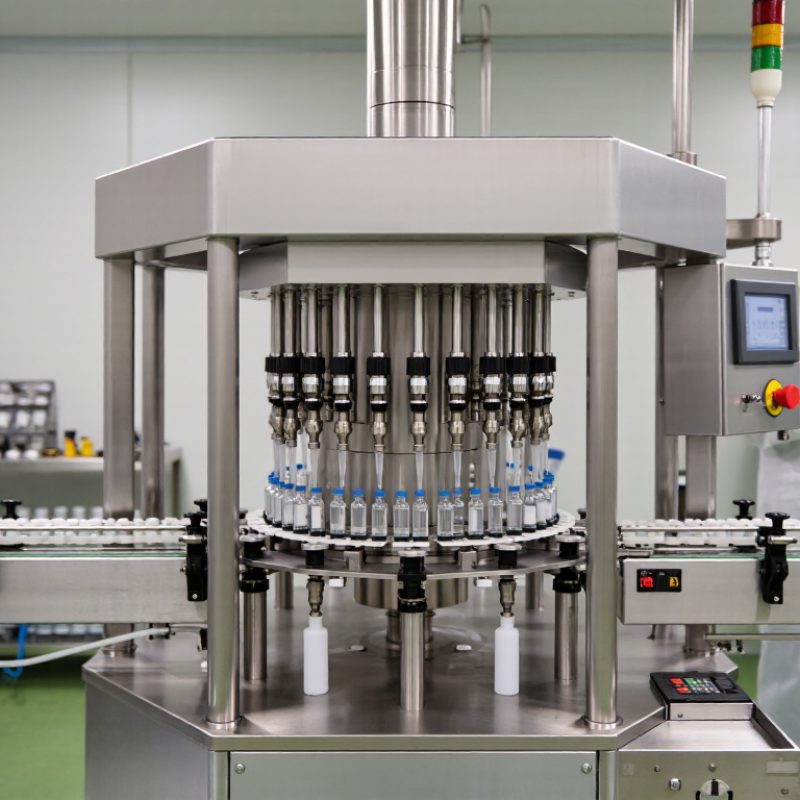
A pharma filling machine is industrial equipment that measures and transfers medicines into containers such as vials, syringes, ampoules, or bottles. It supports controlled dosing, repeatability, and contamination reduction during fill-finish operations. A typical system includes a product tank, feed pump, filling needles, sensors, and a programmable control unit. The product may move by piston, peristaltic pump, or time-pressure filling.
The operating cycle is precise but not complicated. Empty containers enter through an infeed system. Sensors confirm their position, while calibrated nozzles dispense a defined volume. The containers then move toward stoppering, capping, or sealing equipment. In sterile production, the machine operates inside a controlled area, often with barrier technology and validated air protection. The machine itself does not automatically make a process sterile. That distinction matters.
A 2024 Grand View Research analysis estimated the global pharmaceutical fill-finish market at more than USD 9 billion in 2023, reflecting strong demand for accurate filling systems. FDA process-validation guidance also stresses continued process monitoring, not one successful batch. In practice, operators check fill weight, line speed, pressure, and container integrity. Small errors can become expensive waste. No filling machine is perfect. Product viscosity, foaming, temperature, and needle position can still affect accuracy. This is where routine calibration and thoughtful human review remain essential.

Pharmaceutical filling machines transfer measured products into vials, bottles, syringes, cartridges, or capsules. Their main types depend on the formulation, container, and required dose accuracy. Liquid fillers commonly use piston, peristaltic, or time-pressure systems. Piston fillers handle thicker liquids, while peristaltic pumps reduce direct product contact. Time-pressure systems suit low-viscosity solutions and controlled production lines.
Powder filling machines often use auger systems or vacuum dosing. Augers measure powder by controlled screw rotation. Vacuum systems can support lightweight or sensitive powders, but powder behavior remains difficult to predict. Capsule fillers separate, dose, and close hard-shell capsules.
A 2024 report from Grand View Research valued the global pharmaceutical packaging market at over 120 billion dollars in 2023, showing why accurate filling equipment matters across high-volume operations.
Sterile products require aseptic vial, syringe, or cartridge fillers. These machines combine precise dosing with restricted environments, cleaning validation, and in-process checks.
According to industry guidance from the International Society for Pharmaceutical Engineering, contamination control must cover equipment design, personnel, airflow, and process monitoring.
No single filling machine is ideal. A piston system may excel with creams but struggle with foaming liquids. Even advanced equipment needs calibration, container testing, and operator judgment. That practical gap is often underestimated.
A pharma filling machine transfers a measured dose into vials, syringes, or bottles. Its accuracy depends on several connected components, not one magic setting. A product hopper holds the bulk liquid, while a piston, peristaltic pump, or time-pressure system controls volume. Servo drives regulate piston travel and pump speed. The filling nozzle then shapes the stream and limits dripping, foaming, or air intake.
Sensors provide the machine’s feedback. A level sensor monitors the hopper, while photoelectric sensors confirm container position. Load cells or checkweighers can detect underfilled units after dosing. The PLC compares these signals with programmed limits and adjusts motion through the HMI. In sterile production, filtration, restricted airflow, and validated cleaning cycles become equally important. The European Commission’s EudraLex Volume 4, Annex 1, revised in 2022, stresses contamination-control strategies for sterile products. WHO reported approximately 16 billion vaccine doses supplied globally in 2021, showing why repeatable filling control matters at high volume.
A pharma filling machine transfers a measured drug volume into sterile vials, syringes, cartridges, or bottles. Its work begins before filling starts. Operators verify cleaning records, line clearance, container identity, and calibrated settings. The sterile product usually arrives through a closed transfer path. A sterilizing-grade filter may be used when the formulation allows it. Keep it sterile.
The machine feeds empty containers onto a controlled conveyor. Sensors detect spacing, position, and missing units. Filling nozzles then descend or align with each container. Peristaltic pumps, piston pumps, or time-pressure systems deliver the programmed volume. In-process checks compare actual weight or volume with the approved range. An automatic reject station removes unstable or incorrectly filled units. Small deviations matter. Foaming, splashing, and needle movement can still affect product quality.
Stoppering follows for vials, while syringes may receive plunger insertion. Capping or crimping secures the closure without damaging the container. Cameras inspect fill level, closure position, particles, and cosmetic defects. The control system records settings, alarms, rejects, and operator actions for batch review. EU GMP Annex 1 places exposed sterile filling operations in Grade A conditions, normally supported by Grade B surroundings. FDA guidance also stresses validated aseptic processes and environmental monitoring. A 2024 MarketsandMarkets analysis projects the pharmaceutical filling equipment sector to expand at about 6% annually through 2029, reflecting stronger demand for automation and traceable data. Real production lines are less tidy than diagrams suggest. A brief sensor fault may require investigation, not a quick reset. Data integrity remains part of the process, not an optional software feature.
| Step | Filling Stage | What Happens | Main Components | Important Controls | Typical Result |
|---|---|---|---|---|---|
| 1 | Product Preparation | The liquid, suspension, emulsion, or powder is prepared and transferred to the product vessel. | Hopper or tank, agitator, transfer line, sanitary pump | Temperature, mixing speed, viscosity, and product homogeneity | A consistent product supply reaches the filling system. |
| 2 | Container Infeed | Empty bottles, vials, syringes, cartridges, or other containers enter the machine in a controlled sequence. | Conveyor, star wheel, indexing mechanism, container guide rails | Container spacing, orientation, speed, and presence detection | Containers are positioned beneath the filling heads. |
| 3 | Container Positioning | Sensors and mechanical guides confirm that each container is correctly aligned before dosing begins. | Photoelectric sensors, clamps, servo drives, positioning plates | Container presence, neck alignment, fill-head height, and line synchronization | Correctly aligned containers reduce spills and fill variation. |
| 4 | Dose Measurement | A metering system measures the required quantity and sends it through the filling nozzle. | Piston pump, peristaltic pump, time-pressure system, or auger filler | Dose volume or weight, pump stroke, pressure, flow rate, and calibration | The selected product quantity is dispensed into each container. |
| 5 | Filling | The nozzle enters or approaches the container, dispenses the dose, and retracts using a controlled motion. | Filling nozzles, anti-drip valves, lift mechanism, product manifold | Nozzle speed, immersion depth, filling profile, and drip prevention | A measured dose is delivered with minimal foaming, splashing, or dripping. |
| 6 | In-Process Inspection | The machine or a connected inspection system checks fill level, container presence, and visible defects. | Checkweigher, vision camera, level sensor, reject station | Weight tolerance, fill-level limits, missing-container detection, and reject accuracy | Out-of-specification units are identified and separated from acceptable units. |
| 7 | Container Closing | Filled containers move to the appropriate closing operation, such as stoppering, capping, crimping, or sealing. | Cap sorter, stopper placement unit, crimping head, sealing station | Closure presence, application force, torque, seal integrity, and alignment | The product is enclosed and protected from contamination or leakage. |
| 8 | Data Recording and Release | Operating parameters, alarms, batch information, and inspection results are recorded for review and traceability. | PLC, HMI, sensors, electronic batch records, audit trail | Recipe control, access permissions, alarm history, and electronic records | Accepted units proceed to labeling, packaging, or further processing. |
Note: The exact filling method depends on the dosage form, container type, viscosity, sterility requirements, target fill volume, and required production speed. Aseptic systems require validated sterilization, environmental controls, and container-closure integrity procedures.
A pharmaceutical filling machine transfers a measured volume of liquid, powder, or semi-solid product into containers. Filling accuracy depends heavily on the dosing principle, product properties, and machine settings. Thin liquids may require pressure-based control, while viscous products often need piston or peristaltic dosing. Small air bubbles can also change the delivered volume. This detail is easy to overlook.
Temperature matters more than many operators expect. A warmer product may flow faster, while a cooler product may resist movement. Changes in viscosity can create weight variation between containers. The filling nozzle must also match the container opening and product behavior. Dripping, splashing, or foam can reduce efficiency and contaminate contact surfaces. Consistent container positioning is equally important.
Machine speed creates a practical compromise. Higher speed improves output, but it can increase vibration, foaming, and dosing instability. Regular calibration, in-process weight checks, and controlled adjustments help detect these problems early. Operators should record fill weights, line speed, temperature, and cleaning conditions during production. That evidence supports reliable process decisions. However, no setting remains perfect forever. Wear on seals, tubing, and valves can gradually affect performance. A process that worked last month may need careful review today.
As a trusted co-development partner, Teleflex Medical OEM supports industry leaders in the design and development of medical devices with the unparalleled expertise that improves speed, flexibility, and value.
©2025 Teleflex Incorporated. All rights reserved. Teleflex, EPIC Medtec, Force Fiber Fusion, and “Work With The Experts” are trademarks or registered trademarks of Teleflex Incorporated in the U.S. and other countries. Additional trademarks are property of their respective owners.